
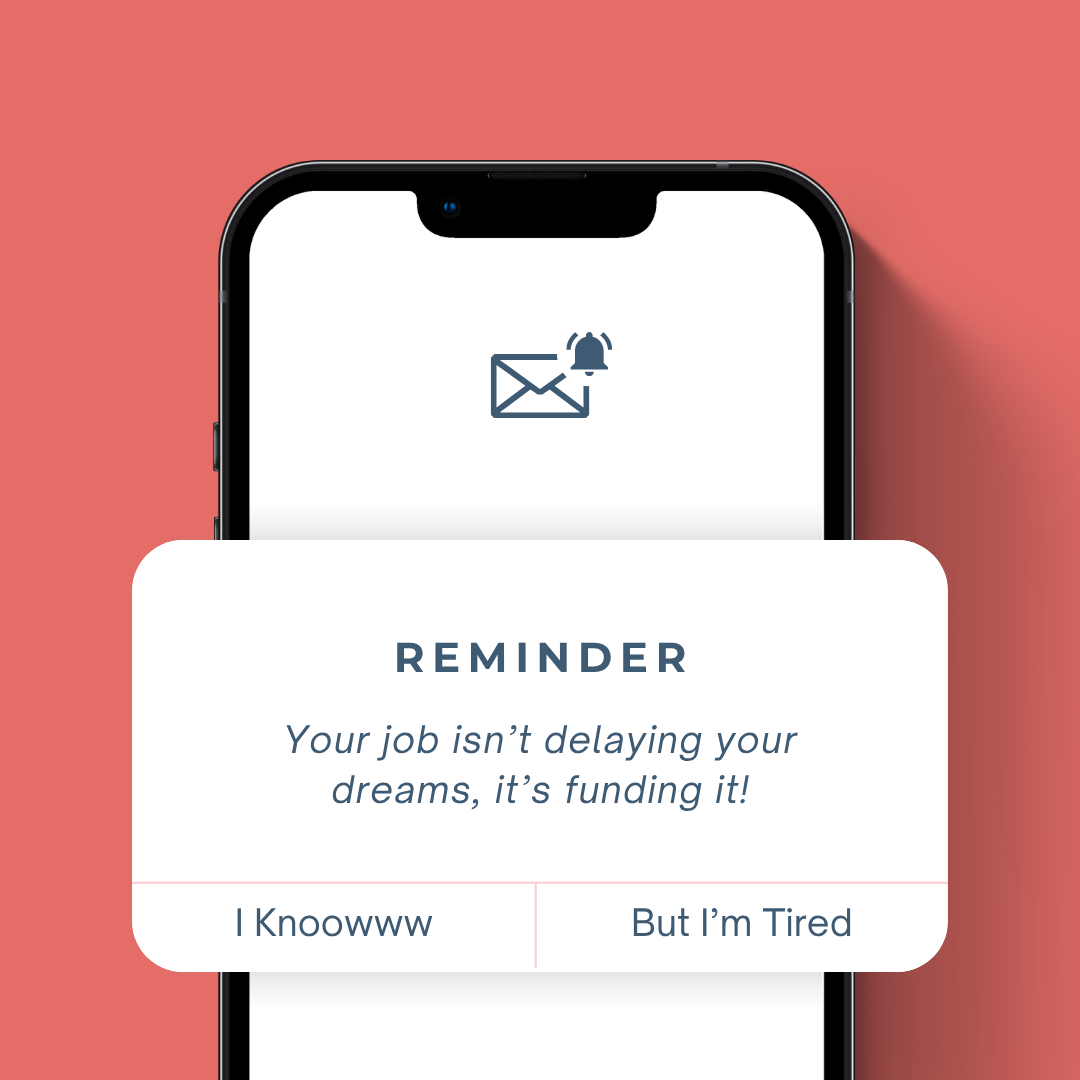

Based on my social media newsfeeds, everyone seems to be launching a business, becoming a content creator, leaving corporate America to “work for themselves”, or leaving America altogether to become digital nomads.
And while there’s nothing wrong with entrepreneurship, one thing we rarely see is the years that led up to the success story.
The late nights.
The weekends.
The uncertainty.
The regular jobs that quietly funded the dream.
Too often, we assume that success requires making one dramatic leap when, in reality, many successful people built their next chapter while still showing up to their current one.
That doesn’t mean you should stay in a job that is unhealthy or miserable forever. But before quitting, it might be worth asking a different question:
“What if my current job is helping me build the life I actually want?”
Use Your Job to Fund Your Dreams
For a long time, I viewed my day job and my aspirations as separate things. But eventually, I started looking at my paycheck differently.
Not as the thing standing in the way of my goals.
But as the thing that helps me fund them.
Your job can provide stability while you invest in:
- Equipment and software.
- Certifications and courses.
- Travel and experiences.
- Savings and emergency funds.
- Future business expenses.
Sometimes, building something meaningful requires embracing delayed gratification.
That may mean driving an older car, skipping unnecessary expenses, or living below your means for a season.
Success rarely looks glamorous in the beginning.
Treat Your Job Like Paid Training
One of the biggest mindset shifts I’ve experienced is realizing that every job teaches something.
Even jobs you don’t intend to keep forever.
Your employer may be paying you to learn:
- Project management
- Customer service
- Leadership
- Communication
- Budgeting
- Sales
- Relationship-building
- Conflict resolution
Those skills don’t disappear if you eventually become self-employed.
In fact, they often become even more valuable.
Looking back, some of the lessons that helped me outside of work were learned because of work.
Relationships Matter More Than You Think
Depending on your industry, your current coworkers, supervisors, and clients may become future references, collaborators, or even customers.
That doesn’t mean every conversation should turn into a sales pitch.
But don’t underestimate the power of simply letting people know what you’re passionate about. You never know who’s paying attention, and you never know who might think of you when an opportunity arises.
At the same time, wisdom matters. Not everyone needs access to your dreams. Some people will support you. Others won’t understand.
Learning the difference is part of growing professionally.
Discipline Is a Transferable Skill
Building something outside of work requires discipline.
Not motivation or inspiration, but discipline.
Some days you’ll be tired.
Some days you’ll make more progress on Netflix than on your side project.
Some weeks you’ll do nothing at all.
That’s normal.
But consistency compounds over time.
And the habits you build in your career—meeting deadlines, staying organized, following through—are the same habits that will serve you elsewhere.
Building Before Leaping
Social media loves dramatic stories.
They’ll show you “she quit her job and made six figures in six months,” but most people don’t build their dream life that way. Most people build slowly and often while working a regular job.
Success doesn’t always require burning the ships.
Sometimes it requires building another boat while you’re still standing safely on the first one.
Because dreams don’t only belong to people willing to take reckless risks. They also belong to people willing to play the long game.
And sometimes, the life you’re working toward isn’t being delayed by your day job. It’s being funded, shaped, and prepared by it.